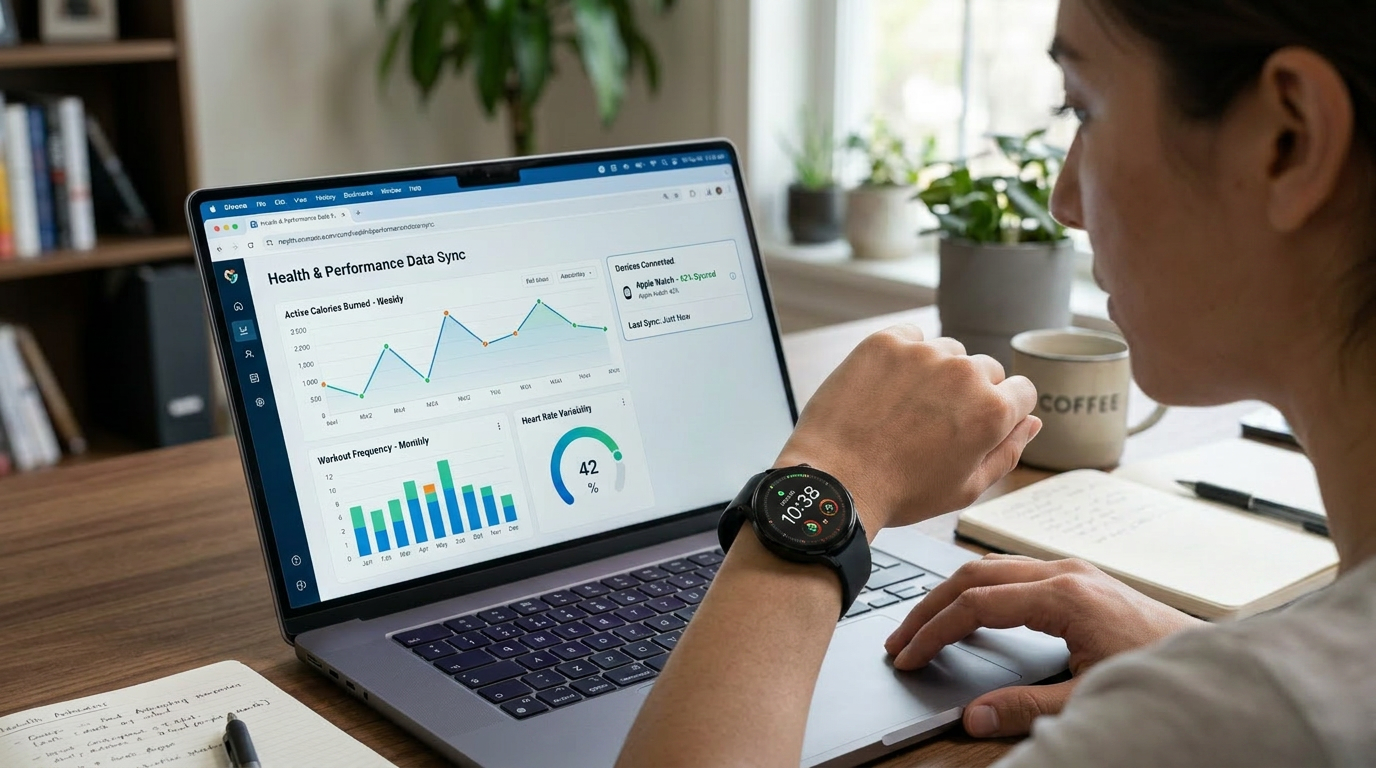
I’ve just made the jump from a Polar + Suunto combo to the Coros Apex 4, and I want to document the process properly — partly for myself, partly because I suspect other data-obsessed amateurs hit the same wall I did.
The actual problem wasn’t the data. It was getting it out.
For the past several months I’ve been tracking sleep, training, and nutrition in a fairly granular way — HRV, sleep stages, workouts, protein and fibre intake. Sleep came off a Polar Loop, built up over eight months into 218 nights of data. Training came off a completely separate device, a Suunto 9 Peak Pro. The insights from the sleep side were genuinely useful: I found out my “awakenings cluster at 2–3am” belief was actually a memory bias (they peak at 5–6am), confirmed a strong link between room temperature and disrupted sleep, and established that my body has a stubborn circadian wake anchor around 07:40 no matter what time I go to bed.
But getting that data out of either device was tedious, in two different but equally frustrating ways. The Polar Flow website and app are very basic — there’s no straightforward export button. To get your own data out, you have to submit a request through the website, wait for a download link to arrive by email, and only then upload and reformat it. The Suunto side was arguably worse: for a quick look, it meant taking screenshots of workout data straight from the Suunto app on my phone and re-uploading those into Claude; for anything more detailed, it meant exporting JSON files from the app, emailing them to myself, and re-uploading them from there. Two devices, two manual pipelines, neither of them quick. The bottleneck was never the analysis — it was the plumbing.
What changed: an official MCP connector
Coros became, to my knowledge, the first major endurance-watch brand to publish an official MCP (Model Context Protocol) server — a live, read-only connection that lets a tool like Claude pull training and health data directly from your Coros account. No exports, no screenshots, no manual re-uploading.
That’s the whole reason I’m switching. The Apex 4 tracks both workouts and sleep — phases, overnight HRV, training load — on a single device, and the MCP pipes all of it in automatically. Two separate manual pipelines, one from Polar and one from Suunto, collapse into a single automated connection with zero manual intervention: no export requests, no waiting for email links, no screenshots, no JSON files to mail to myself.
Setup was close to trivial: add a custom connector, point it at the single MCP endpoint Coros provides, and it’s live.
What this doesn’t solve
There are still some limitations to my process though:
- Nutrition is still entirely manual. The watch has no idea what I eat. Protein and fibre tracking still means logging things myself — the MCP carries zero nutrition data, and I don’t expect that to change.
- Body composition (weight, body fat) is separate too. That data comes from a Withings scale, which doesn’t have an MCP yet. It’s been stable enough that this isn’t a priority to solve.
- Sleep accuracy is an open question, not a given. Coros’s sleep tracking has improved a lot, but it isn’t universally rated as more accurate than Polar’s — and sleep is one of the two datasets I care most about. Given I have eight months of Polar baseline data, I’m not switching blind: I’m running both watches in parallel for a couple of weeks first, specifically to see how the sleep and HRV numbers compare before I trust the Coros numbers on their own.
What I’m hoping to get out of this
Practically, the goal is simple: stop losing time to data plumbing and spend it on actually understanding the data instead. I want to be able to ask a real question — like whether higher-protein weeks track with better sleep or lower next-day soreness — and answer it against real, current data, instead of spending twenty minutes exporting files first.
There’s also a genuine athletic reason underneath the tech reason. I’m currently working through a structured, multi-phase training plan ahead of a trail running race, and separately keeping an eye on ski-season fitness. Both of those benefit from tight feedback loops — knowing quickly whether a training block is landing the way it should, rather than reconstructing it after the fact from a pile of half-exported files.
What’s next
Over the coming week I’ll be running the Apex 4 alongside both the Polar Loop and the Suunto 9 Peak Pro, and logging what I notice — sleep stage agreement, HRV consistency, how the interval/workout data holds up against what I’m used to. I’ll write that up as the next post in this series once I’ve got enough parallel data to actually compare.
If you’re a fellow trail runner or ski data nerd going through a similar device decision, I’d love to hear what you found — feel free to get in touch.
Leave a Reply